

Sciatica treatment in Lahore
Sciatica is not a diagnosis on its own — it is a symptom. Something is pressing on or irritating the sciatic nerve, and the pain travels from the lower back down one leg. Finding out what is doing the pressing is the whole job, because a disc and a tight piriformis muscle feel almost identical and are treated differently.
- First assessment
- Rs 2,500 Follow-up Rs 2,000
- Every session
- 40–45 min One-to-one with a doctor
- Typical course
- 5–7 sessions Packages available over 7 sessions
- Home visits
- Rs 3,000 DHA Phase 1, 2 & 3
Does this sound like you
What sciatica feels like.
- Pain running from the lower back or buttock down the back of one leg
- Pins and needles, numbness or burning in the leg, calf or foot
- Worse sitting, driving, or standing up after sitting
- A sharp catch when you cough, sneeze or strain
- Pain down one side only — rarely both
- The leg feeling heavy, weak or unreliable on stairs
What usually causes it
- Disc herniation or bulge
- The most common cause. A disc in the lower back presses on the nerve root as it leaves the spine, and the pain follows the nerve down the leg.
- Piriformis syndrome
- A tight muscle deep in the buttock squeezing the sciatic nerve underneath it. Both doctors treat this specifically, and it is regularly mistaken for a disc.
- Lumbar radiculopathy
- Irritation of the nerve root itself, often from narrowing or arthritis in the spine rather than a disc. More common with age.
- SI joint dysfunction
- Pain low down near the belt line on one side that can refer into the buttock and thigh, and be mistaken for sciatica for years.
- Long hours of sitting
- Not a cause on its own, but it is what turns a small irritation into six months of leg pain. A desk, a long commute and a soft sofa do most of it.
You do not need to know which of these it is before you come. Finding that out is what the first assessment is for.
How we treat it
What actually happens, in order.
Find out what is pressing on the nerve
Your first visit is a full 40–45 min with the doctor. We test the nerve directly, check reflexes and strength in the leg, and separate a disc from a piriformis from an SI joint. Treating the wrong one of those three is why so many patients say physiotherapy did not work for them before.
Take the pressure off
Hands-on treatment from a certified manual therapist — releasing the piriformis and the deep buttock muscles, and mobilising the lower back so the nerve stops being squeezed with every movement.
Settle the nerve pain
Therapeutic ultrasound, TENS, IFT, EMS, laser, dry cupping and heat are used to calm the pain and the muscle spasm around it, so that you can move and stretch without setting the leg off again.
Nerve glides, strength, and sitting
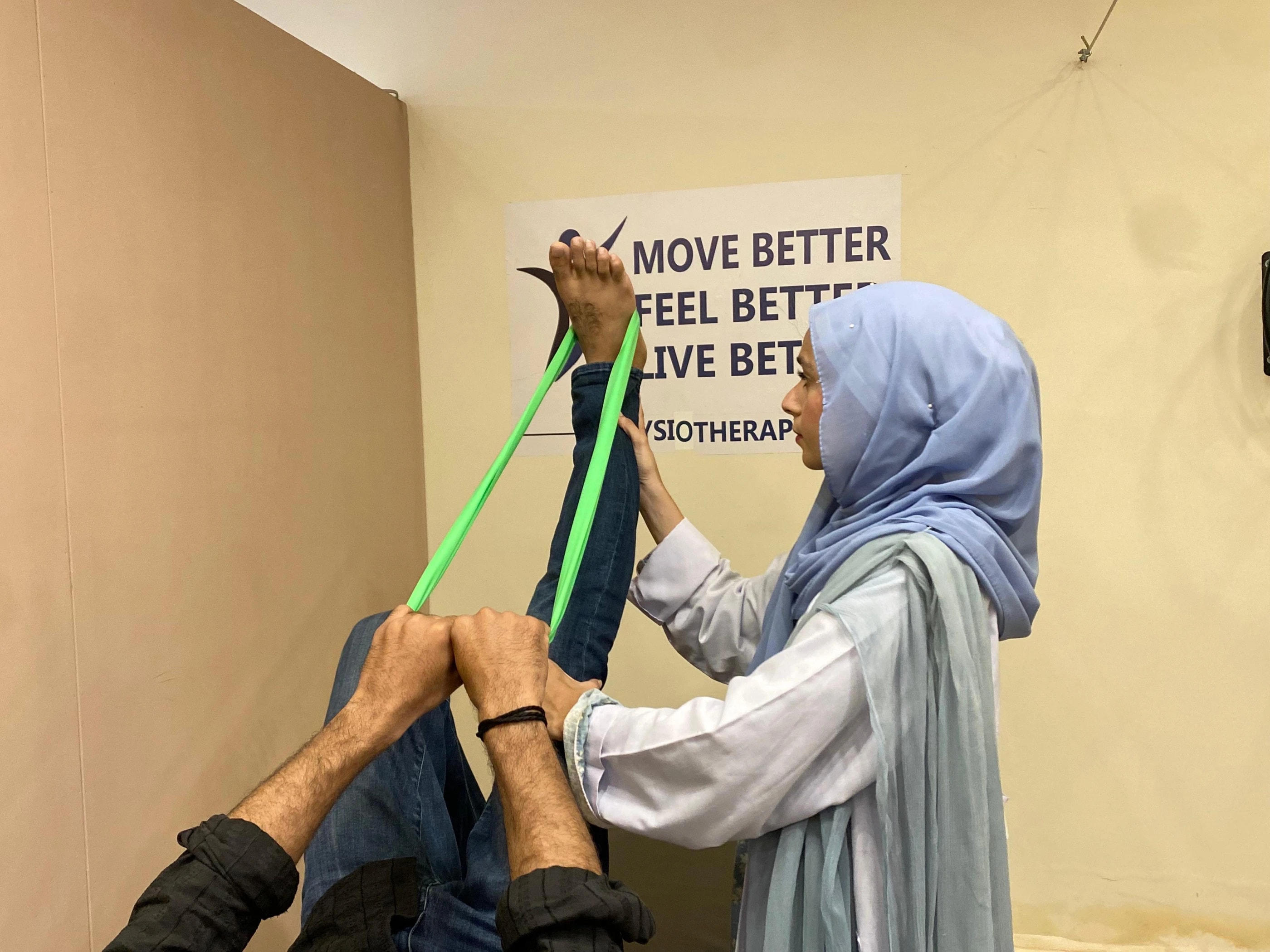
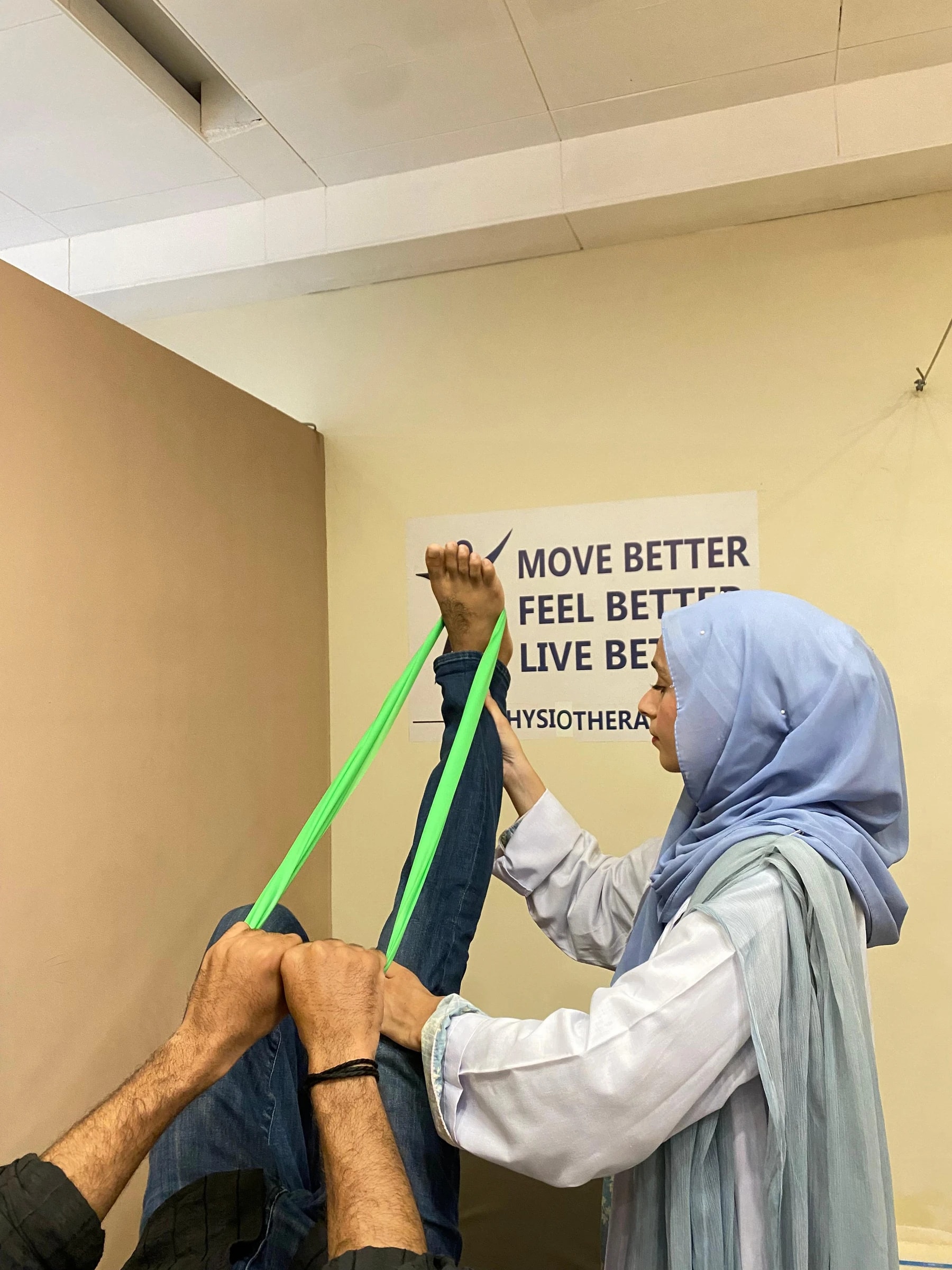
Specific nerve mobility exercises, core and hip strengthening with thera-bands, and the fixes for how you sit and drive. Sciatica that is not followed by this stage is sciatica that comes back.
See a doctor first if any of these apply.
Physiotherapy is not the right first step for every problem. Call us and we will say so honestly, or go straight to a doctor if:
- Numbness around the groin or between the legs, or loss of control of your bladder or bowels — this is an emergency, go to a hospital now
- Weakness in the leg or foot that is getting worse, or a foot that drags when you walk
- Sciatica down both legs at the same time
- Fever, unexplained weight loss, or night pain that wakes you from sleep
Who will treat you
Both doctors treat this.
Whichever time suits you, you see a Doctor of Physical Therapy who handles this condition every week — not an assistant.
Dr. Maryam Tanveer
DPT, MPhil · Certified Manual Therapist
Dr. Mehwish Warraich
DPT · Certified Manual Therapist and Chiropractor
Questions
Before you book.
Do I need an MRI before I come?
No, and you do not need a referral either. The assessment tells us whether a scan is needed. Plenty of sciatica settles without one, and paying for a scan first usually just delays the treatment.
How long does sciatica take to settle?
Most patients need 5–7 sessions. Nerve pain often eases in the first week or two, but the leg needs the full course to stop it returning. You are reassessed as you go, so if you need fewer you stop sooner.
Is it a disc, or is it piriformis syndrome?
They feel very similar, and this is the single most useful thing the first assessment gives you. The tests are different, and so is the treatment — a piriformis needs releasing, a disc needs the load taken off it.
Should I rest until the leg pain stops?
No. A day or two of taking it easy is fine, but lying down for a week makes sciatica worse. Part of the first session is working out which positions and movements are safe for you to keep doing.
Will I need surgery?
Most people with sciatica do not. Surgery is for a small minority, usually where there is progressive weakness or the pain has not responded to anything. If your assessment suggests you are in that group, we will say so.
Can you treat my sciatica at home?
Yes, across DHA Phase 1, DHA Phase 2, DHA Phase 3 at Rs 3,000 per visit. Worth asking about if the car journey itself is what sets the leg off.
Can I be treated in Urdu or Punjabi?
Yes. Both doctors speak Urdu, English and Punjabi.
Book
Leave your number and we will call you.
Or call 0327 4349159 directly — we are open Mon–Sat 1:00 PM – 10:00 PM · Friday from 3:00 PM.
Also treated here
Other conditions.
Knee Pain
Morning stiffness, pain on the stairs, tightness after sitting too long, swelling around the knee.
Read more →Lower Back Pain
Difficulty bending, lifting and walking. Pain and tightness that worsen after sitting for long.
Read more →Frozen Shoulder
Shoulder pain that is worse at night, stiffness and restricted movement, difficulty reaching your head or behind your back.
Read more →Neck & Shoulder Pain
Aching in the neck and shoulder, sharp pain on turning or bending the neck, pain moving down the arm, numbness and tingling, muscle spasm and weakness in the arms.
Read more →Sports Injuries
Muscle strain or sprain, swelling and pain around the joint or muscle after a twist or jerk, bruising and tenderness, restricted range of motion.
Read more →Post-Surgery Rehab
Weakness and lost strength after a knee replacement, ACL surgery or a fracture, with muscle tightness and limited flexibility.
Read more →